
The Brook Macdonald interview: A dog in the fight
Brook ‘the Bulldog’ Macdonald on how he fell in love with mountain biking, why he left UCI racing, and what’s next for one of the most recognisable figures in downhill.
Words Justin Henehan | Images Red Bull Content Pool
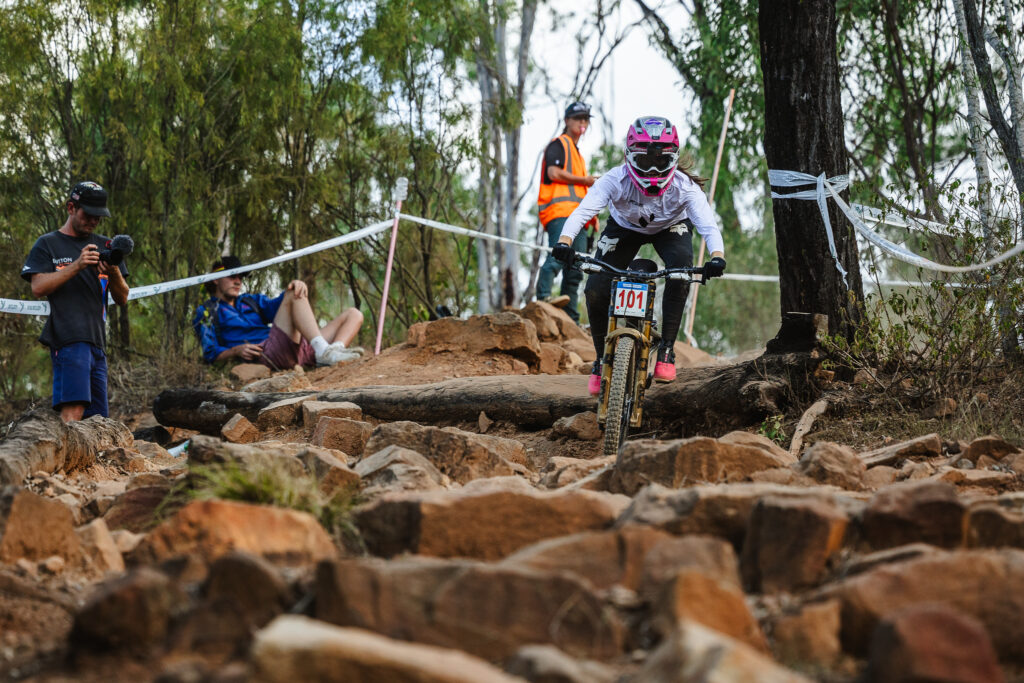
Brook Macdonald has had a storied career in downhill mountain bike racing. From winning the junior Championships 2009, to his World Cup win at Val d’Isere, France in 2012, Brook’s belligerent, burly riding style made him one of the most recognisable figures in mountain biking and a fan-favourite fixture on the World Cup circuit.
After his horror crash at the 2019 Mont-Sainte-Anne UCI World Championships, Brook didn’t know if he’d be able to walk again, let alone ride a bike. But through a combination of dogged determination, support, and good luck, he fought his way back to be racing again at the top level just a year later.
The five years since has seen a shift of focus for Brook away from UCI downhill to competing in a range of other events, including Crankworx, Red Bull’s Hardline and the Genova Cerro Abajo street races. We sat down with Brook to talk about his early years, how downhill racing changed over his career, why he decided to step away from UCI racing, and what he plans to do next.
Hi Brook. Thanks for taking the time to talk to us. How have the past six months been for you?
It’s been good, just obviously something different for me with no longer going to the World Cups. I kind of fell out of love with the sport, just with the way the format changed and Warner Brothers taking over. I think they changed the sport a lot.
On top of that, I had some struggles with the bikes I was riding and not being able to jell with them, so that made it a lot harder and contributed to pushing me away from the sport and the love for it and why I did it.
Obviously this year’s been a lot different. I’ve been focussing on Crankworx and the Red Bull street races, and through those I’ve found that love for racing again. Doing those races has brought back that drive and hunger to compete and try to win again.


After being on the UCI World Cup circuit for such a long time, you’ve probably been able to spend a bit more time at home over the past little while. How’s that been for you?
It’s been really nice because for the past 15-16 years I’ve literally jumped from summer to summer and never really spent much time in New Zealand in the winter.
I started traveling when I was probably 16 years old. 2008 was the first year I went overseas and basically from then onwards I traveled the world. So it’s been pretty tough going from a life of travelling most weeks to travelling every two months. Adapting to that was pretty hard because travelling had become such a big part of my life. I just get itchy feet—I just want to keep traveling.
But it’s definitely been good not having so much pressure with racing World Cups and just being able to go out and ride my bike and have fun. When I finished racing World Cups, I really wanted to rediscover my love for the sport and to put the fun back into it. I didn’t want to finish and hang everything up and leave the sport and go do something different—I still wanted to race my bike. So, I think for me it was about finding a balance between racing, riding, and travel.
“I really wanted to rediscover my love for the sport and to put the fun back into it.”
Looking back kind of at your World Cup racing, is there a run that stands out to you as the most meaningful?
Probably my 2009 World Champs run and my World Cup win are probably two of the runs that stand out most for me.
For the 2009 World Champs, I was in the juniors with the likes of Danny Hart and Sean O’Connor, who were like the two main riders dominating the World Cup that season. I had no clue what I was doing, but I knew that I had to put in so much hard work because I knew what the track was like, how flat it was.
I also knew that these guys had factory support and I was just on a small team with a big passion to win races. So putting in a huge effort and coming away with the win was huge. Also winning the same day as Steve Peat was pretty special.
My first elite World Cup win was huge for me because that race day, that race run, and what I did prior to that to be able to do that and put everything together to win became a benchmark for me throughout my career. I always wanted to replicate what I did there in every other race.

What’s your focus now?
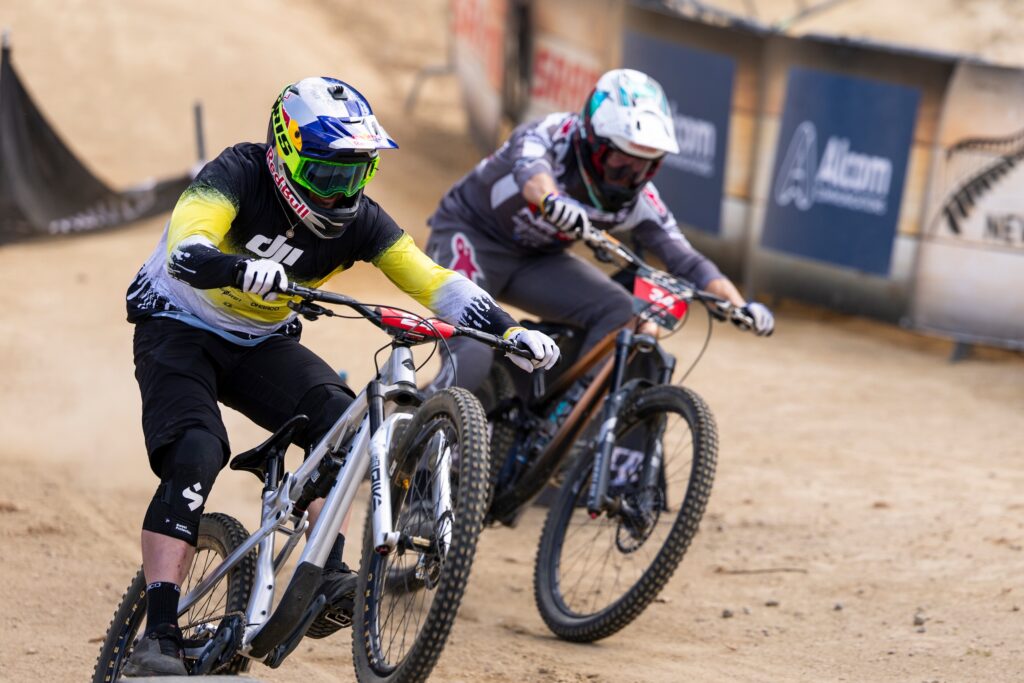
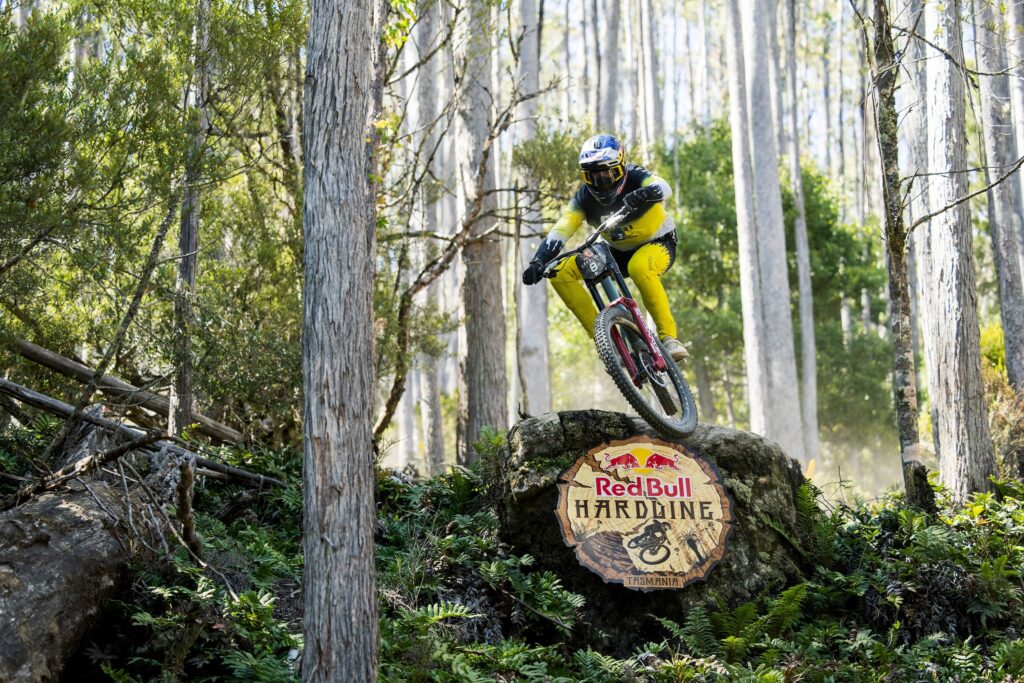
I’ll be doing something similar to this year—Hardline, the Cero Abajo urban races, some Crankworx, and then hopefully just work on some film projects. I definitely want to go to South Korea to race the World Cup there just because it’s something different. Racing for 15 years, I was pretty much at the same venue for a majority of that time and you never really got to travel outside of Europe, so racing in South Korea would be cool. Also it’d be cool to pick up my career number.
Also I love racing in South America. The atmosphere and vibe around those races is exactly the type of racing I want to be a part of—the people there and how chill it is and, you know, it’s just a whole different vibe. It’s so cool to be racing in front of people that are able to get so close to you. The South Americans are super nice and they travel around like a big family. It’s such a good vibe.
Going back to those days before you got on the international racing circuit, what was it like growing up in Napier? Where did you ride and who were you riding with back then?
The riding scene in Napier was really good. There were a lot of people riding when I got into it. I basically got into it through a good mate of mine who I’d played rugby with in my early days. He basically got me on the scene and I basically fell in love with the sport straight away.
It was more of a freeride scene back then. We had shuttles once a month and we’d go to the skatepark every day. We’d also go to a place called Park Island, which was a walking area, and we’d scratch in our own tracks there. I feel like those were probably the most important days of my life and the build up to my career.
Was that when you first found the love for riding that you’re chasing now?
Yeah, definitely. At the time I never had any idea where mountain biking could take me—for me it was just riding bikes. I got to ride my bikes with my mates and have fun and travel around to some local races. For me, back then, it was just about creating friendships and riding bikes.

It feels like there were a bunch of notable Kiwi riders around that time.
Yeah, I looked up to a bunch of the guys who were racing then, but mainly Sam (Blinky) Blenkinsop. I definitely formed a really good friendship with Blinky.
At the time I never really knew where racing could take me. I obviously had Sam to look up to and how he was putting mountain biking on the map in New Zealand. I guess it wasn’t until I got selected to race World Champs that I thought that there was potential to make riding into a career.
What was the best thing about racing when you first started out?
The best thing was just riding bikes with mates and qualifying and then going to the after party. That was like what we lived and breathed—it was like, riding bikes, having fun, racing, and going to the after party, and just doing that on repeat. Every weekend or every second weekend when we were racing World Cups. Those are the core memories for me and that’s where I hold a lot of love for the sport and World Cups because everyone was riding their bikes with their mates and ripping laps. We’d be doing 10 laps in a day and then it was qualifying and finals day and we’d be talking about going to the afterparty. Whatever the result was, we’d be stoked because we got into the finals so we’d have a massive party and then do the same thing the following weekend.
“That was like what we lived and breathed—it was like, riding bikes, having fun, racing, and going to the after party, and just doing that on repeat.”
Do you feel like something’s been lost from the racing culture of that time and what do you think that is?
Oh 100 per cent—it’s changed so much. Even the racing in New Zealand has changed. Our sport is very niche, but what I see is people trying to make it like Formula One and it can never be that. You haven’t got these multi-millionaire or billionaire people hanging around the sport for someone to come in and support a team with a budget of €20-30 million.
With the budgets these teams have now and what Warner Brothers is trying to do, it’s so different to the sport I grew up with. It’s always good to have a change but I think the way they changed it was way too quick and, I don’t think, works for the sport.
For me, 2024 was the year I realised how much the sport had changed. Just the way the schedule was run, it was no longer about riding bikes together because we had two hours practice in the morning and two hours practice in the afternoon and there were 200 riders trying to get to the top of a hill. The fundamental reason for riding bikes had been stripped away and it just became so serious. It was already elite but the changes took it to a whole other level.
I found that hard because I was so used to how it was when I was growing up. For a good 12 to 13 years my racing career was just about having fun and when the results came they came, which was amazing. If they didn’t, you’d be gutted but you’d go to the next race and try to perform better.
Now there’s only so much you can put into one run, and trying to replicate that over multiple runs is really difficult. You just have to be on the limit all the time and, as a result, I feel like we’ve seen way more people getting taken out. It just doesn’t need to be like that because the risk versus reward is already so high in our sport. You just can’t do the perfect run multiple times—it’s too mentally and physically taxing. And if you’re having two or three weekends of bad results or you’re not even qualifying, that takes its toll. That’s where I lost the love for the sport.
“It's always good to have a change but I think the way they changed it was way too quick and, I don't think, works for the sport.”
Two race runs was ideal for me—you had one day where you could give like 95 to 100 per cent and then finals day was just all out. Whereas now consistency is so key. That’s why you see a lot of the top guys going through to Q2 and then sometimes not even making the finals.
I’ve also seen the sport change a lot in New Zealand. Now you turn up to a local race and you have these parents that seem to be pushing their kids so hard. They’re on the track watching lines, you know, telling them to go follow other kids with their GoPro to get their lines if they’re quicker.
I asked a friend whose kid is racing downhill about what the kids are like in the sport and he said his kid has a couple of friends, but a lot of them are not that friendly because he’s fast and they see him as a threat.
When I was growing up, racing was just about riding bikes, meeting new people, going on adventures to different places and riding all these random spots on the way. Whereas now it seems like the parents feel like they’ve got to get their kid there early so they can go get extra practice.
I don’t see the fun in it in New Zealand for these kids—it just seems too serious. It’s kind of sad because I just want to see those kids having fun like we did when we grew up racing. It only takes a certain amount for them to burn out and not like the sport and get pushed away from it.
In the end it comes back to why I got into mountain biking and why I started racing bikes. It wasn’t because I wanted to win national races so I could win Crankworx races and then World Cups. It was because I love having fun on my bike. There weren’t any expectations, it was just about taking the opportunities that came along and trying to make something out of them.

A lot of young riders are focussed on getting sponsored. You’ve been with Red Bull a long time. How did that sponsorship come about and what have they been like as a sponsor?
So basically after I won Junior Worlds in 2009 I was like “F*** it, I’m going to reach out to Red Bull and see if there’s an opportunity there.” I had no idea how to write an email or what to say in it, but me and my mum just thought we’d give it a nudge. They got back to us saying they weren’t looking for riders at the moment—they already had Vanessa Quinn.
Then I went into 2010, which was my first year in elite. I had a pretty decent season with a couple of top tens and they must have been keeping an eye on me. Nowadays Red Bull brings you in on a programme with some support for small things but I got the call in December 2010 and I was literally straight into a helmet. It was such a big day for me and something that I’d always dreamed of as a kid. It was my childhood dream to ride for Red Bull and to be told here’s a helmet and go and race your bike was pretty damn amazing. And 15 years later I’m still working with them.
They’ve honestly been the most amazing sponsor I’ve had the opportunity to work with. Just the company itself lives and breathes action sports, so they’re all for supporting you in any way possible to help you achieve your goals and be at the highest level of your sport.
And the opportunities that I’ve had through Red Bull with networking and being able to go to different events and meeting different athletes—it’s been a huge accomplishment for me because having them on board has got me to where I am today in my career.

Your spinal injury in Mount-Saint-Anne in 2019 and your incredible recovery to be back racing just a year later has been well covered. What was it like getting back on the bike for the first time after your injury?
To be honest, for me, the only possibility was to ride my bike again and I never really had any doubts that I wasn’t going to be able to do that again. Whether it’d happen or not, I had no way of knowing, but in my head, it was going to work.
In the end, getting back on my bike was probably the easiest thing. Walking was the most difficult part but riding came easily.
Why was that?
I think it was just because it’s something I’ve known for a majority of my life, obviously walking comes naturally, so you never ever think about it, but mountain biking was my job, so it was something I thought about every single day.
Do you think that attitude of being certain you’d ride again helped your overall recovery?
I think for me that mindset and setting goals were a huge part of getting me back to where I am today. If I didn’t have that mindset and that positive outlook, I don’t think I would be nearly as good as I am today—I don’t think I’d still be riding and racing my bike. The effect that mindset and goal setting can have is huge and I feel like that’s what got me back to racing my bike.
Was it hard to find your way back to race speed?
Finding the speed was the easy part. The hard part was the long-term effects of the injury and in all honesty it’s taken me a good four-and-a-half years to actually get back to somewhat normal. I’m obviously never going to be the same as I was prior to my accident, just in terms of strength and neural pathways.
The biggest thing for me was the strength in my legs. Standing on the pedals, I’d have a lot of uncontrollable shaking in my feet. It took more than a year to strengthen the muscles that control my feet so I could stand on a pedal properly.
Crashing was a huge part of it as well. I went over to Europe in 2020 and I spent about six weeks riding my bike most days. The last piece of the puzzle was to have a big crash, just so I knew my back was going to hold up to it. Once that happened, I felt like I could go into racing normally.
Anyone who’s seen you race will have seen you have some massive crashes where you’ve bounced back up and been fine.
Yeah, literally my whole career there were so many big crashes and I just got back up and carried on like nothing happened.
Did the experience of that injury change you personally?
I guess it did as much as I know how lucky I am to have a second chance at life. It just made me realise life can end pretty quickly—you can have everything taken away from you in the click of your fingers. And I felt like I just wanted to live and live my best life. I know I was very lucky to be able to have a second chance, a second life at racing my bike again. And for me, after that, every time I hopped into a start gate was a win.
“I know I was very lucky to be able to have a second chance, a second life at racing my bike again. And for me, after that, every time I hopped into a start gate was a win.”
Did it change your perspective on taking risks?
Not really. I feel like I take just as many risks now as I used to before my accident but I’m probably a little bit more wary about some things. I still struggle a little bit with risking some things. Riding my bike at a certain level, I lost a lot of confidence in my equipment. I really struggled to jell with some of the equipment I was on, so I lost a lot of confidence and honestly I still feel to this day that I’m trying to build that back up. There are days when I still get waves of constantly doubting myself, but I feel like I probably have more days now where I have more confidence because I feel better with the equipment I’m on now and the pressure of racing bikes is not there as much as it used to be.
What advice would you give to young riders dealing with difficult stuff whether that be injuries or mental health?
I guess the biggest thing is listening to your body. You know your body the best so listen to that. Having a positive mindset, the right people around you, and setting goals is the most important thing—I think that’s what got me through everything.